
I am delighted that German company Black Forest Labs has released a major update for its image model FLUX. FLUX.2 is optimized for workflows and generates high-quality, photorealistic images. It can process up to ten reference images, reliably follows complex instructions, and renders even fine text and brand logos flawlessly. The maximum image size for editing has been increased to up to 4 megapixels. Overall, FLUX.2 delivers significantly sharper textures, more stable lighting, and better consistency than its predecessor.
There is also the 32-billion-parameter version FLUX.2 [dev] available as open weights on Hugging Face. This allows you to run FLUX.2 locally on your own GPUs. However, this is only permitted under a non-commercial license. This means that you can experiment or conduct research with the open version, but commercial use of images is not permitted. For productive projects, you must use the paid FLUX.2 offerings (e.g., FLUX.2 [pro] or [flex]).
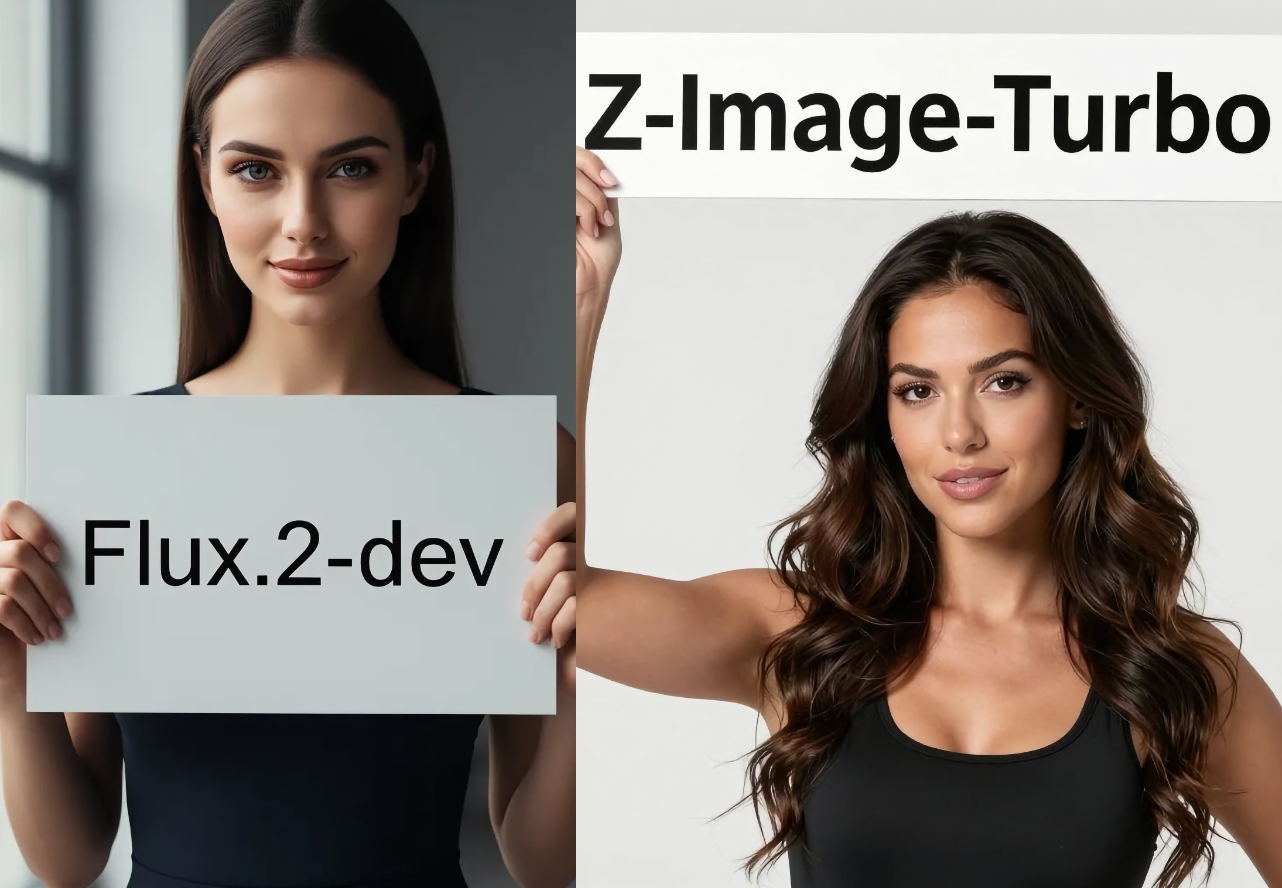
Shortly after FLUX.2, Alibaba made a comeback. Known for its Qwen model, Alibaba had already introduced Qwen-Image as an open-weight model, a 20-billion-parameter system with excellent text representation. Now came Z-Image-Turbo, a particularly lean image model with only 6 billion parameters. Z-Image is designed to be extremely efficient. In my tests, Z-Image generates images very quickly with only 8 sampling steps. On a powerful graphics card, the “Turbo” variant can deliver in one second. On my MacBook, the model delivers in about 2 minutes. The quality is remarkably high for such a small model: Z-Image generates photorealistic images and handles the rendering of complex texts in English and Chinese very well. According to the AI Arena benchmark, Z-Image delivers top scores among open image models.
In my own work, I particularly appreciate the speed and openness of Z-Image. It runs smoothly on consumer hardware and is well suited for quick experimentation. However, FLUX.2 [dev], as the largest open image model currently available, offers the best image quality and most comprehensive features if you are willing to invest in a commercial license.
Conclusion: FLUX.2 and Z-Image take different approaches. FLUX.2 offers studio quality, optimum consistency, and flexibility. It is ideal for professional applications, but requires a license and a lot of computing power. Z-Image, on the other hand, focuses on efficiency. It delivers good results in seconds and is completely license-free for everyone to use. Professionals with high image quality requirements will probably opt for FLUX.2, while developers and researchers can enjoy the speed and freedom of Z-Image.