
It’s Not the Model That Decides, It’s the Skills
When people talk about on-device AI today, they almost always start with models. With parameter counts, quantization, memory requirements, tokens per second, latency, and power consumption. I think about these things constantly myself. For me, it’s part of the craft. Especially on devices with clear constraints, this work is crucial. A model that is too large slows things down. A model that is poorly quantized loses quality. A model that looks strong on paper can still feel disappointing in everyday use.
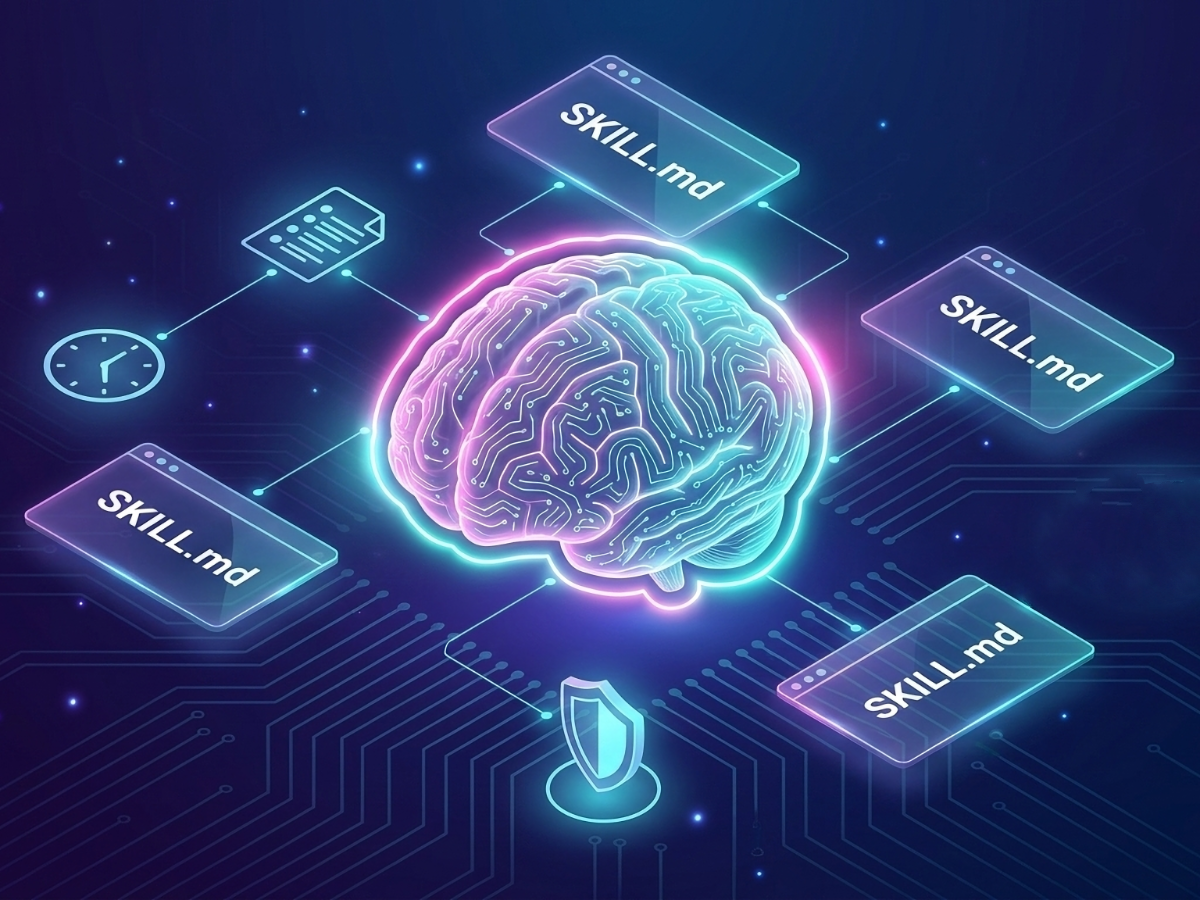
But the longer I work with local AI, the clearer another point becomes. The models are converging. The real difference emerges elsewhere. It’s the skills that determine whether AI becomes truly useful in everyday life or ends up being just a good chat window.
In the field of on-device AI, I spend a lot of time getting the technical foundation right. I optimize model sizes, evaluate quantization levels, monitor inference speed, and compare how a model behaves on different hardware. All of this is important. Without this work, on-device AI quickly becomes sluggish, impractical, or simply unreliable. Still, the real value only emerges for me when a system performs specific tasks well and integrates meaningfully into my workflow.
A strong model without the right skills is, to me, often just a very good chat window. It can respond, formulate, generate ideas, explain code, or revise text. But it often remains passive. Only with the right skills does the role of AI change. Then a model becomes a tool. A tool becomes an assistant. And eventually, it becomes an integral part of everyday life.
I see this very clearly in my own setup. With my personal assistant (picoclaw), I actively use skills for weather, mail, calendar, OpenHUE, and BlogWatcher. They simplify my daily life and give me more time for my family and hobbies. Good skills don’t make AI more spectacular—they make it more useful.
I see the same with my coding assistant. There, I mainly use skills for code review, testing, and UI work. Code review in particular provides immediate, tangible value for me. Not as a replacement for experience and not as a final authority, but as a highly attentive second perspective. Clean code doesn’t come only from expertise. It also comes from clarity, consistency, and the early detection of small weaknesses before they become unnecessarily expensive later. When a skill specifically supports this, my mental overhead decreases noticeably. I have to keep less context in my head at once, overlook fewer details, and reach good decisions faster.
For me, this is the real test of any AI solution. Not whether a demo is impressive. Not whether a benchmark looks good. And not whether a model scores a few points higher in theory. What matters is whether the solution integrates into real work. The model remains the foundation. Without a solid foundation, everything built on top becomes unstable. This is especially true in on-device environments, where technical limits are real. Every additional gigabyte matters. Every unnecessary delay is noticeable. Every gain in efficiency is valuable.
But the foundation alone is not a house. Skills are the architecture. They determine whether a model becomes a system that fits into my daily life. They decide whether AI is truly integrated or ultimately remains just a clever chat window.
That’s why I still pay attention to model size, quantization, and inference speed—and I always will. But when I evaluate whether an AI solution truly benefits me today, I ask a different question as well: how well can the model select and use the right skills? Because that’s where the real difference emerges in practice. Not in abstract model comparisons, but in concrete capabilities that save time, reduce friction, and improve work every day.
The model provides the intelligence. The skills provide the value. And in the end, that’s what really matters.